Start with the full outfit, not only the gown
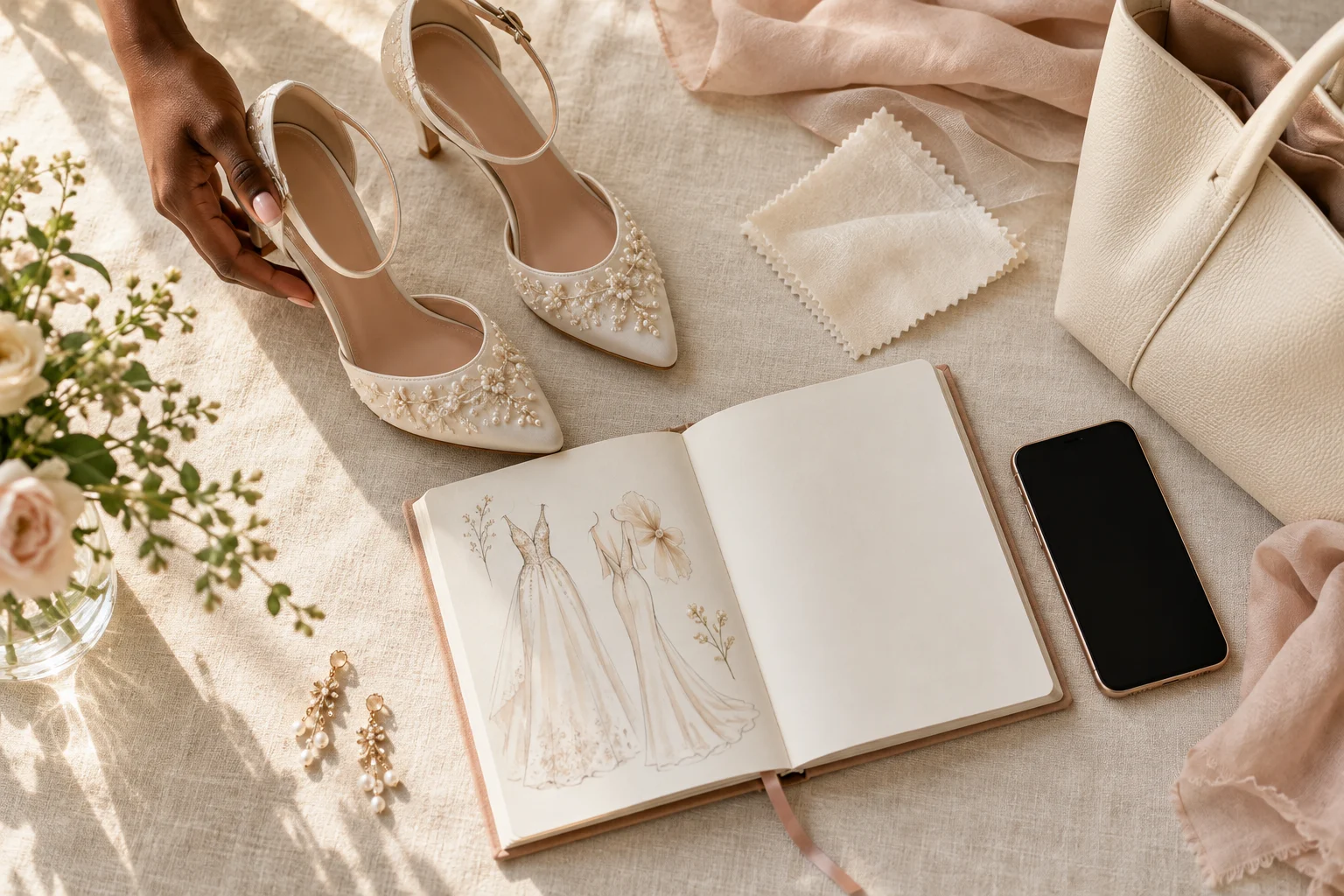
When brides say “dress budget,” they often mean the amount they hope to spend on the gown itself. That is an important number, but it is only one part of the finished look. Alterations, shoes, undergarments, a veil or other accessories, and caring for the gown after the wedding can all belong in the same plan.
Begin with one total amount you are comfortable assigning to your wedding-day look. Then divide that amount into categories. You do not need a perfect prediction. You need enough structure to understand which choices are connected.
Choose an ideal range and a firm ceiling
An ideal range tells your stylist where you would like to land. A firm ceiling tells both of you where the search must stop. Those numbers do not have to be the same.
For example, you may prefer to keep the gown comfortably below your ceiling so there is room for a veil and alterations. Or the gown may be your highest priority, while accessories stay simple. The useful question is not “What should a wedding dress cost?” It is “What amount lets me enjoy this purchase without taking money from priorities that matter more?”
Share both numbers at the beginning of the appointment. A budget is not something to apologize for. It is information your stylist can use to make the appointment more relevant.
Your five-part budget worksheet
- Gown: Write an ideal range and a firm maximum.
- Alterations: Reserve a separate amount and ask what changes may be needed for the specific gown.
- Accessories: Decide which items are priorities and which are optional.
- Foundation pieces and shoes: Include anything that may affect the final fit or hem.
- After the wedding: Consider cleaning, storage, preservation, resale, donation, or another plan for the gown.
Keep alterations separate from the tag price
Alteration needs depend on the gown, the fit, the construction, and the changes you choose. That makes a universal estimate less useful than a conversation about the actual dress.
Before committing, ask which fit changes appear likely, whether the boutique performs alterations or refers brides elsewhere, and when fittings should begin. If you are considering a complicated change—such as reshaping a neckline, adding sleeves, or modifying a train—ask whether that idea is practical before treating it as part of the plan.
The goal is not to predict every stitch. It is to avoid spending the full outfit budget on the gown and leaving no room to make it fit the way you want.
Decide which accessories belong in the budget
Accessories can change how a gown feels, but they do not all need to be chosen at once. Separate them into three groups: essential, meaningful, and optional.
- Essential: Items that affect fit, comfort, or what you can wear with the gown.
- Meaningful: Pieces you strongly want, such as a particular veil, heirloom, or statement accessory.
- Optional: Finishing touches you can decide on after the gown is selected.
This protects the pieces you care about most while keeping flexible items from competing with the gown too early.
Choose a shopping path that matches your priorities
The three Hill Bridal Collective stores offer different starting points. Lace Bridal Couture offers stylist-guided appointments for exploring its designer bridal collection. Love Curvy Bridal centers a one-on-one stylist experience and specifically encourages brides to bring an ideal budget and inspiration. The Reading Bridal Outlet guides brides through an off-the-rack selection of new gowns that are ready to take home.
These experiences solve different shopping needs. A bride who wants to explore a special-order collection may plan differently from a bride who prefers an off-the-rack gown. The best place to begin is the one whose shopping model, timing, and experience fit your priorities.
Compare complete choices, not isolated price tags
Two gowns with similar prices may lead to different total plans. One may need fewer fit changes. Another may make a separate accessory unnecessary. A third may be the clearest expression of what you want and make the decision easier.
When you compare finalists, use the same questions for each:
- Am I ordering a gown, or purchasing the exact gown I tried on?
- What is included in the quoted price?
- What alterations appear likely based on the sample fit?
- Which accessories would I actually want with this dress?
- What are the current payment, cancellation, return, and pickup policies?
- Does the timeline work for my wedding date?
Policies, availability, and timelines can change, so confirm them directly with the boutique for the specific gown and appointment.
Use your budget to narrow—not limit—your experience
A clear budget does not remove the joy from wedding dress shopping. It removes uncertainty. It lets you focus on gowns you can seriously consider, gives your stylist better direction, and makes the moment you find a favorite easier to evaluate.
Before your appointment in Reading, write down your total outfit amount, gown range, firm ceiling, accessory priorities, and questions about alterations. Bring that note with your inspiration. You will be ready to shop with both excitement and a plan.