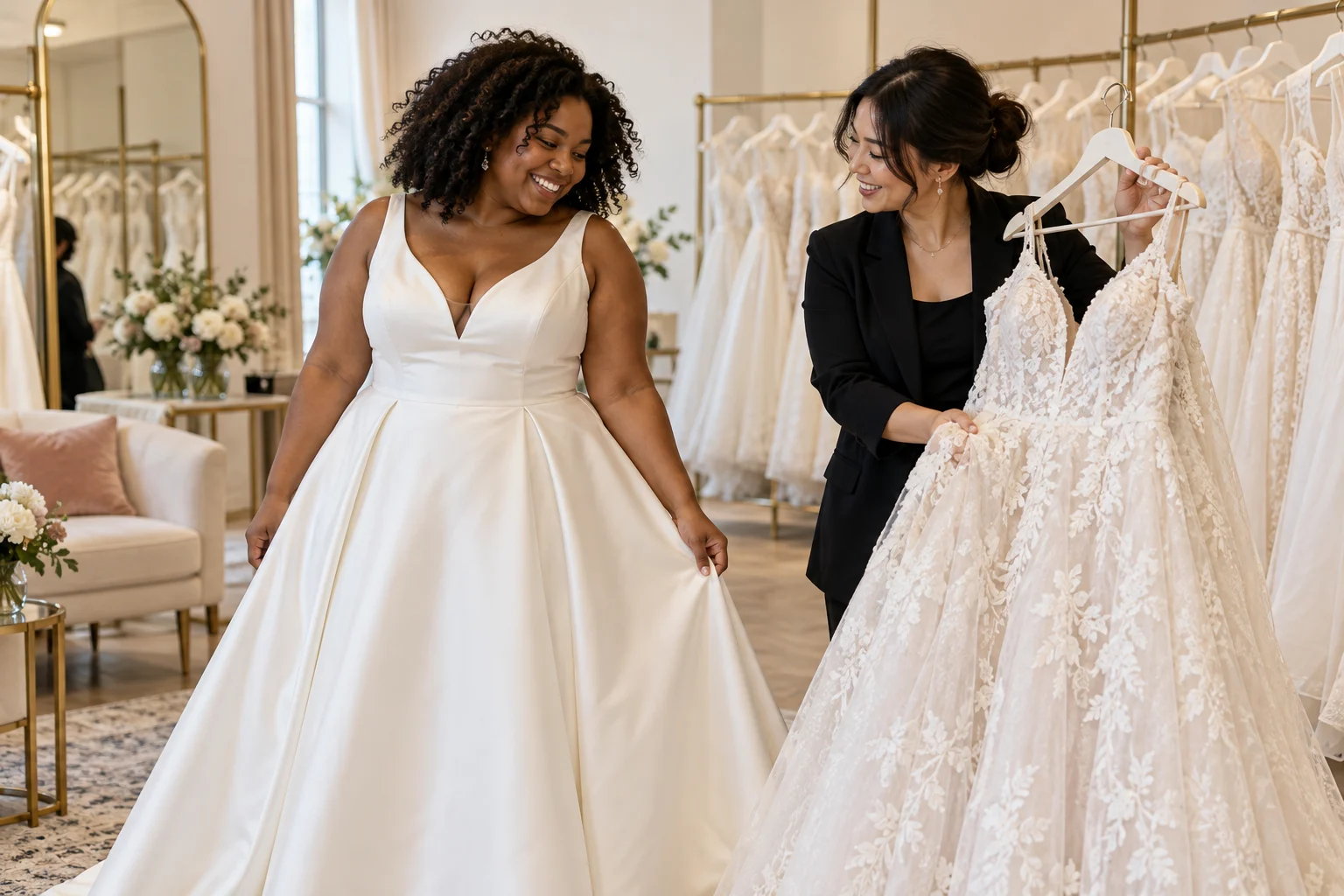
There is no magic dress count
Some brides recognize a favorite in the first few gowns. Others need time to compare silhouettes, fabrics, structure, and shopping experiences before their priorities become clear. Neither path is more correct.
Instead of arriving with a target such as “I must try ten dresses,” give each gown a job. Early dresses help you learn. Middle dresses help you narrow. Final dresses help you confirm. When a new gown no longer teaches you anything or meaningfully challenges your favorite, the count matters much less.
Start with three clear priorities
Before the first try-on, name three things you want the gown to do for you. Your list might include easy movement, a defined waist, lightweight fabric, a dramatic train, secure support, simple details, or a feeling that fits your venue. Add your wedding date and working budget so your stylist can guide the appointment with the full picture.
These priorities are not rules that prevent discovery. They are reference points. If a gown surprises you, ask why. You may learn that the feature you thought mattered was really standing in for something more important, such as comfort or proportion.
Use a three-bucket method
As you try on dresses, sort each one mentally into one of three groups:
- Not for me: You learned something useful and can release the gown without revisiting it.
- Needs a comparison: You like an element, but need another silhouette, neckline, fabric, or level of detail to understand the preference.
- Strong contender: The gown meets your important priorities and makes you want to see it again.
This keeps the appointment from becoming a competition among every dress you have seen. Most gowns only need to teach you one thing. A small number earn a second look.
Keep trying when the next gown has a purpose
Another dress is useful when it answers a specific question. You might want to compare fitted and fuller silhouettes, see whether sleeves change the balance, test a softer fabric, or understand how much detail feels right. Tell your stylist exactly what you are trying to learn.
Keep exploring if your favorite looks beautiful but leaves an unresolved concern about movement, support, coverage, or how it fits your wedding plans. A strong decision should make room for practical questions, not ask you to ignore them.
Pause when the dresses start to blur
More options are not always more helpful. Take a short reset if you can no longer describe what changed from one gown to the next, if every dress receives the same reaction, or if you are trying on something only because it is available.
During the pause, name your current top two and one reason each remains in consideration. Then ask to revisit the stronger one. Seeing a favorite again after several comparisons often provides more information than adding another unrelated dress.
Know the signs that you may be finished
You may be ready to stop when one gown meets your important priorities, feels comfortable enough for the way you plan to celebrate, and continues to stand out after a fair comparison. You should also understand the practical next step for that specific dress.
Be cautious when the only reason to continue is the thought that an undefined “better” dress might exist. If you can name what is missing, keep looking for that feature. If you cannot name what you want to improve, revisit the gown that already works and evaluate it on its own merits.
Choose the shopping environment that supports your search
A useful appointment begins with the kind of collection and experience you need. Lace Bridal Couture describes a personal designer-gown experience with private suites and a stylist devoted to the bride’s vision. Love Curvy Bridal specializes in bridal sizes 16–34 and centers size-inclusive gown shopping. The Reading Bridal Outlet offers off-the-rack designer gowns that can be taken home the same day.
Those are different starting points, not different versions of the same appointment. Choosing the store that matches your priorities can make each try-on more relevant from the beginning.
A simple end-of-appointment check
Before you leave or make a decision, ask yourself:
- Can I explain what I love about my favorite without comparing it to someone else’s expectations?
- Have I moved, turned, and looked at the gown from more than one angle?
- Do I understand whether I am ordering a gown or purchasing the one I tried?
- Have I asked the boutique about the current timeline, next steps, and policies for this purchase?
- If I try one more dress, what exact question do I expect it to answer?
If the last question has no clear answer, you may already have the information you need. The goal is not to try the most wedding dresses. It is to learn enough to recognize the gown—and the shopping path—that feels right for you.